

Packing commercial kitchen equipment for storage
Kitchen equipment does not fail in storage because something hit it. It fails because it was packed damp, packed greasy, or because a loose part ended up in the wrong box. This is the order we work in, and why each step is there.
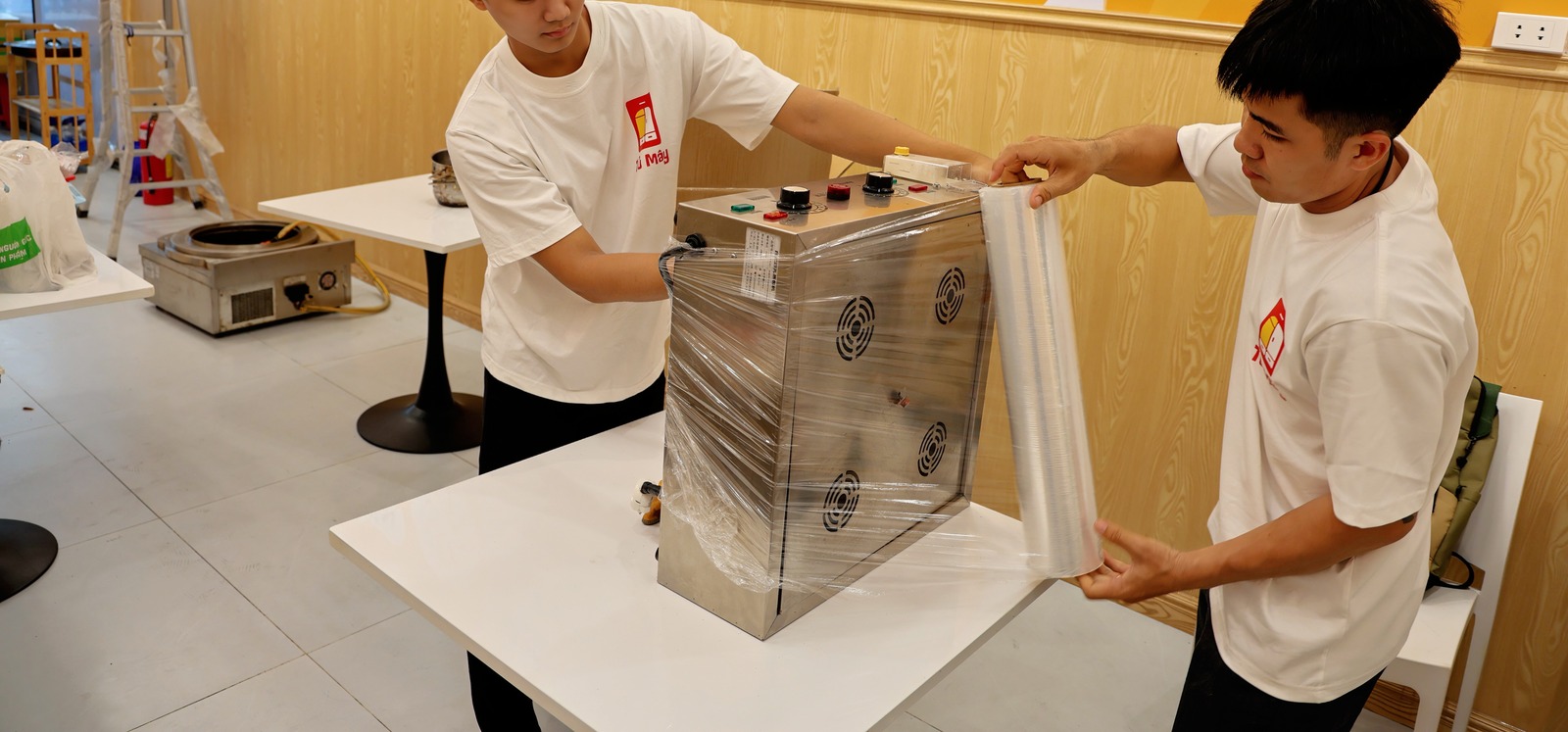
The right order
- Unplug and let it cool fully. Warm stainless sweats inside the wrap.
- Strip every loose part: blades, trays, racks, screws. Wrap separately, tag to its own machine.
- Wash the grease off, then hand-dry with a cloth. Do not let it air dry.
- Stretch-wrap the body, never over oil or water.
- Store it upright in its working orientation, not on its side, not stacked.
The three things that actually ruin equipment in storage
The first is moisture. Ho Chi Minh City is humid most of the year, and a machine sealed while still damp keeps that damp inside the film for months. The stainless will survive it. The bearings, the motor and the control board will not.
The second is grease. Cooking oil left on a surface oxidises, thickens and sours. After a few months it no longer wipes off, and the smell transfers to everything stored near it.
The third is a lost part. A complete machine missing its blade is still a machine you cannot use, and a loose blade sitting in a box of crockery is a blade nobody will ever find.
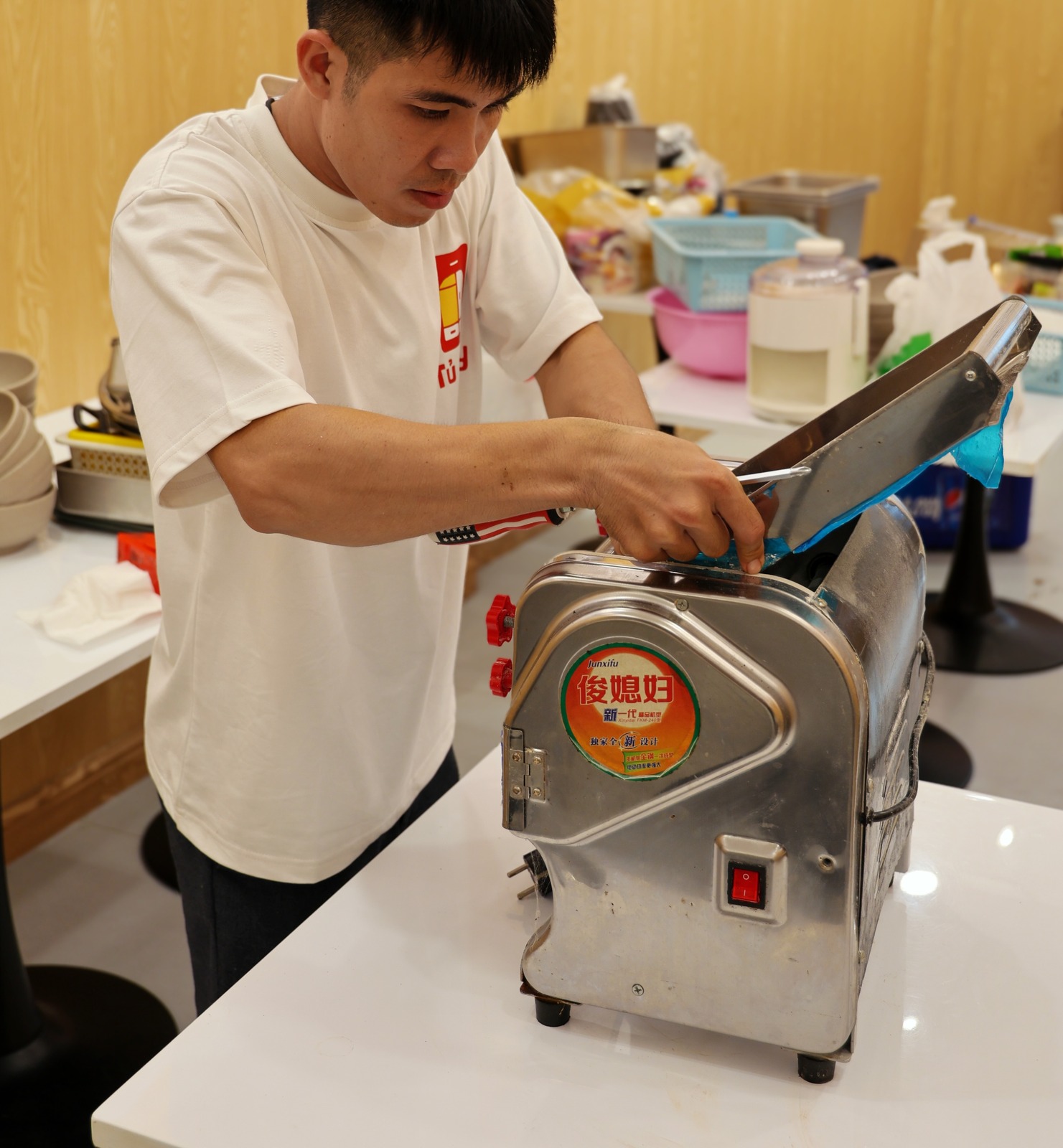
Step by step, in order
- Unplug it. If it has just been running, wait until it is properly cold before touching it.
- Photograph it assembled. Reassembly later is then a matter of looking at the photo.
- Strip the loose parts: blades, trays, racks, handles, adjustment screws. Wrap each set and label which machine it belongs to.
- Wash the grease off with warm water and a kitchen-safe degreaser. Nothing abrasive on stainless faces.
- Hand-dry with a cloth. Do not air dry, because "looks dry" still holds water in the seams.
- Wrap glass and plastic components separately; they are more brittle than the body.
- Stretch-wrap the body, tight enough that nothing shifts, not so tight that it presses on controls.
- Label the outside: what the machine is, and how many loose parts travel with it.
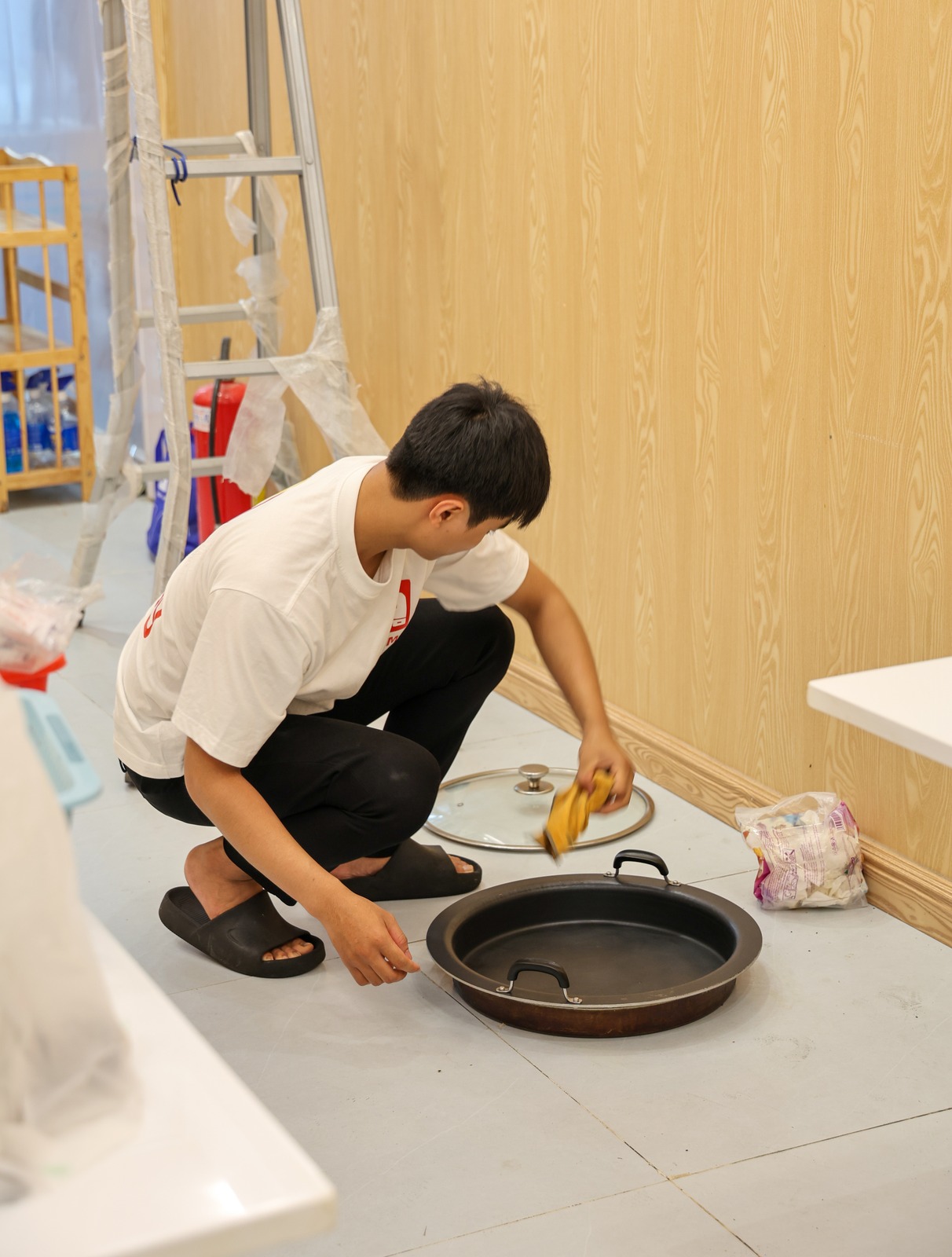
What goes in a box, and what does not
| Group | How it is packed | The common mistake |
|---|---|---|
| Bowls, plates, dishes | On edge, padded between each, small boxes | Stacked flat and high, then cracking from the bottom |
| Pots and pans | Nested with cloth between layers | Stored with a thin film of oil still on them |
| Knives, machine blades | Wrapped alone, tagged to a machine or a tool box | Left loose in a shared box |
| Powered stainless machines | No box. Stretch-wrapped, stored upright | Laid on their side to fit the space |
| Shelving, prep benches | Dismantled, bundled per unit, fixings bagged per unit | All the fixings in one bag for the whole kitchen |
| Ceiling and track lighting | Own box, lamps padded | Left for the builders to take down |
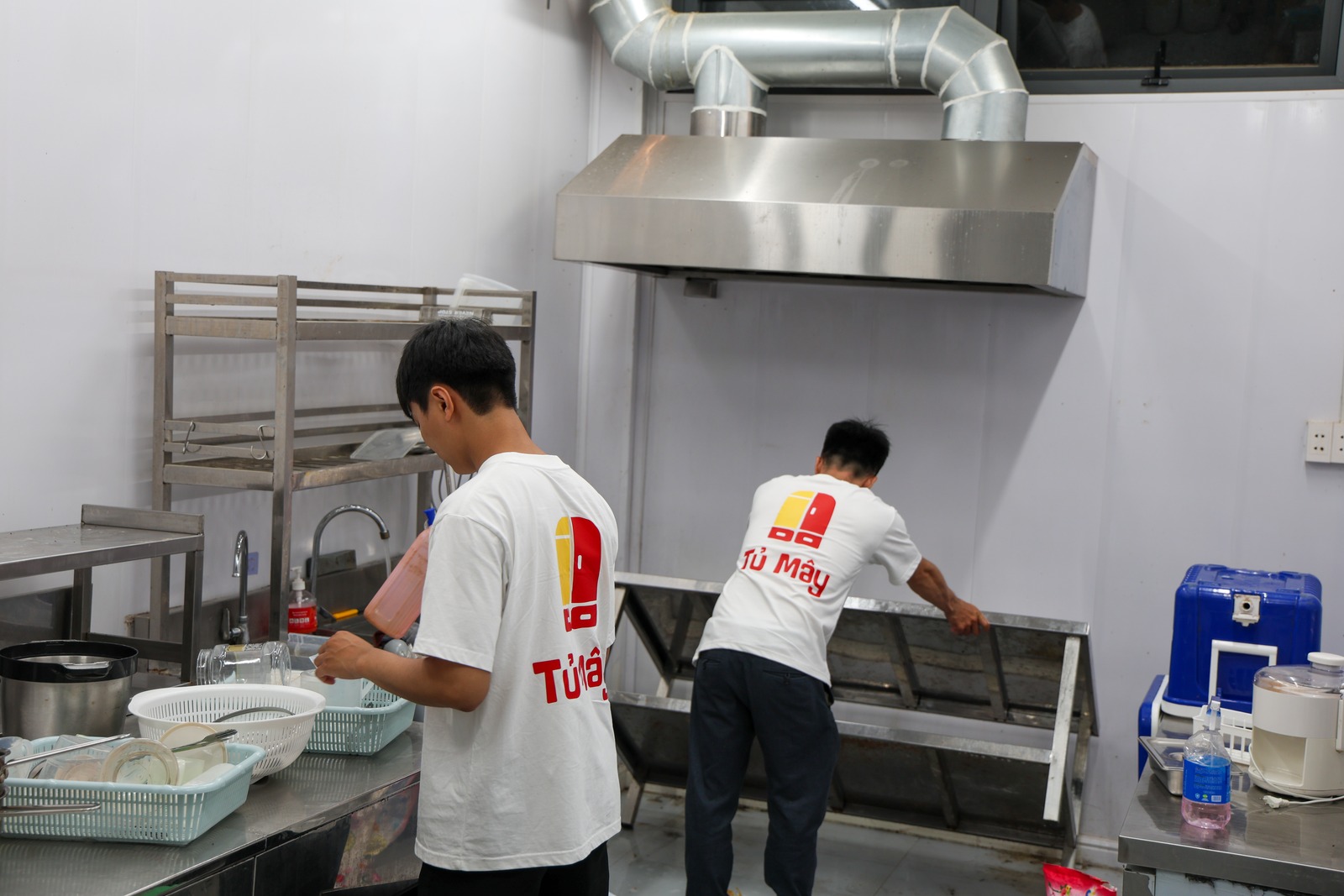
Standard storage or air-conditioned
A stainless body is fine in standard storage. What needs thinking about is the control board, the motor and anything with a rubber seal. Our air-conditioned storage holds 23 to 25°C, and for a kitchen sitting through the rainy season that difference costs less than one board repair.
Tủ Mây price list · standard / air-conditioned
If you are doing it yourself
It is entirely doable, and most owners do it. Three things are worth remembering: dry it more thoroughly than feels necessary, keep loose parts with their own machine, and photograph it before you take it apart. Those three cover almost every failure we see on kitchen equipment somebody else packed.
Kitchen equipment goes into a normal storage plan, counted in boxes. We do not accept anything illegal, dangerous, perishable or alive.
Frequently asked
Will you clean the grease off for us?
Yes. Washing and drying is part of the pack. It is the step that decides whether the machine still runs months later.
How is a large machine priced if it does not fit a box?
By the shelf space it occupies, converted to an equivalent number of boxes, on the published price list.
How often should equipment be run during long storage?
We do not publish a fixed interval because it depends on the machine. If you want to test one mid-term, book a delivery for that item and send it back.
Do you take freezers and chillers?
Yes, provided they are defrosted, cleaned and fully dry, and kept upright throughout the move.
Store it, get it back when you need it
We come to you, pack, photograph every item and keep it on a secure shelf, standard or air-conditioned. One message brings any of it back.
Keep reading
- A restaurant closed for renovation, and 50 boxesWe came in after closing, washed and dried every piece, stretch-wrapped the machines, packed 50…
- Storage for restaurants and cafesStorage for restaurants, cafes and bars in Ho Chi Minh City: temporary closure, a refit, a move…
- Stretch film and boxes: which one for whatWhat stretch film is actually for, what belongs in a box instead, and the packing mistakes that…
- Restaurant furniture: store it or sell itClosing for a few months of building work: is it cheaper to store the furniture or sell it off…